Directions from Penn Station to The Brooklyn Navy Yard:
From Penn Station walk to 34th St. Herald Square. Take the F train towards Brooklyn. Take the F train to York St., exit the station and walk about 10 minutes to the Brooklyn Navy Yard. The Brooklyn Navy Yard 141 Flushing Ave Brooklyn, NY 11205
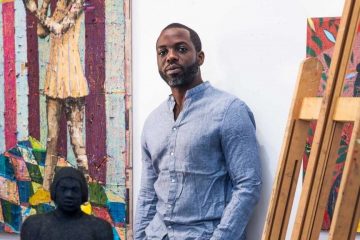
CAMERON MARTIN
We went to his studio in Brooklyn and saw his newest work. He described how he gets ultra-smooth surfaces and immaculate application using an air brush with a very thin mixture with acrylic and water. He also uses a compressor to get a more uniformed surface.
Earlier, he used to paint landscape. His work used to focus on contemporary imaging of nature. Now, he told us, that he has decide to do something different from everything he had done before and he wants to paint each canvas with a different subject matter and using a different method. He wants to intrigue the viewer to spend time understanding and questioning how was the process that he created to get that result. He is more motivated on this new subject matter but he leaves the meaning to the viewer to decide what it is. He uses different interfaces to achieve an optical phenomena which plays tricks with the eyes. His concept is abstract but very well structured in phases. He got inspiration from Pop Art and the diminutive combination of colors that the artists from Pop Art use to do, the phenomena takes place in the eye’s retina and how the painting can translate this in put. Each painting has a different relation with space and movement. He uses different approaches between the figure and the ground and he changes the sequence, sometimes he paints first the background and other times he paints the foreground first. They floating on meaning because you can’t really know for sure what he is trying to show us. His special relationship puts a dimensionality into the canvas. He uses logic of staking or layering to build up the image. His process uses a lot of control over the way he works on each part of the canvas, even though he use some aleatory to add in the final piece.
He use an adding method that consist of covering parts of the piece with masking tape and painting on different parts of it and then changes the masking. He just see’s the final product when its finished. I got confused about which part was handmade and which part was mechanical, and that is exactly what he wants to make the viewer think in the process. He studies perception and philosophy and he is not interesting in illustration. For him technology is a meaning to reach a better solution. He uses technology to figure out what he wants to express. Previously he developed an exhausting method and now he is more excited to paint in this new way
Dieu Donné
We went to a paper making studio that has a focus on experimentation and collaboration with artist.Dieu Donné which was founded in 1976 by Susan Gosin and Bruce Wineberg with the purpose of exploring the untapped potential of hand paper making as an art medium. Now they are based in the Navy Yard commissioned by the government and are a nonprofit organization. They rely a lot on internship labor.
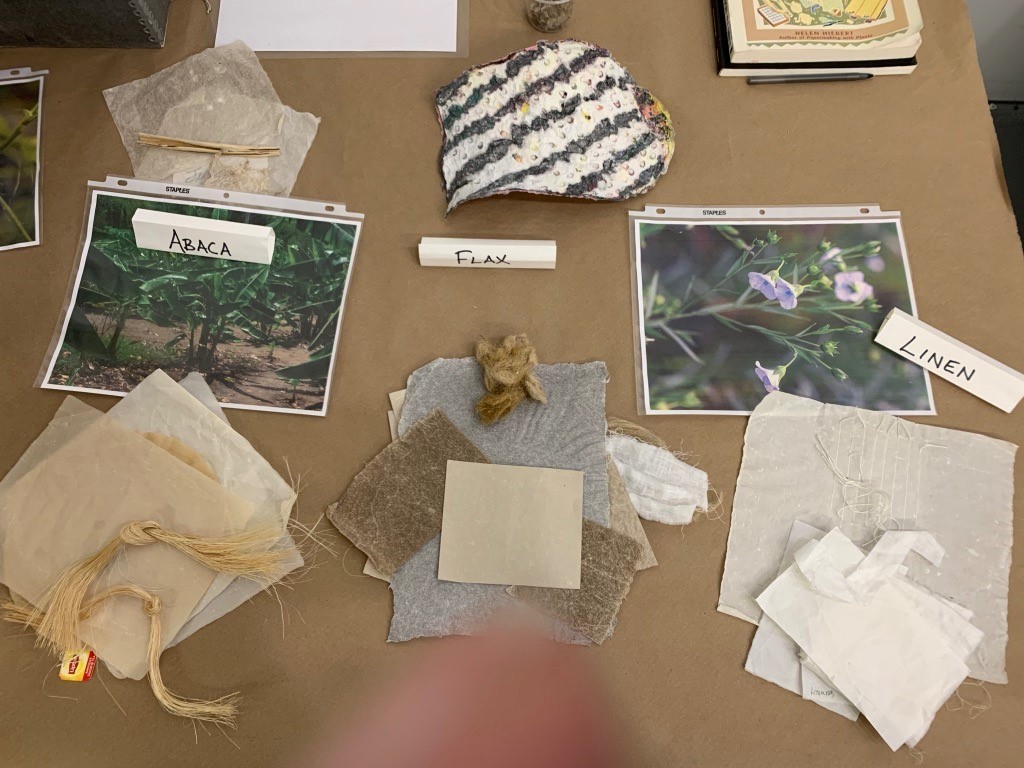
They explain the different types of fibber that can be used and also non traditional ones chosen by the artists, but usually they use a variety of traditional fiber sources – such as cotton, linen, abaca, and raw flax – or select alternative fibers. Depending on this the paper can range from thick, heavy-weight sheets to translucent. We did a tour of the studio to understand the process of producing paper and all the phases in it.
The way they beat the fiber is going to determinate the quality of the paper. They crush the fiber cell by beating it. The longer the beating the more purified water it will soak up and the longer it will need to dry.
To prevent the paper from yellowing is a choice that starts with the quality of the material, pure celula usually don’t become yellow, and water quality ( filtered water added with calcium carbonite creates a alkaline state ) and storage.
They have workshop classes to teach people with a hands on process how to make paper and they also have special projects with select artists to help them develop new projects using
experimental processes with creative techniques to create original works of art.
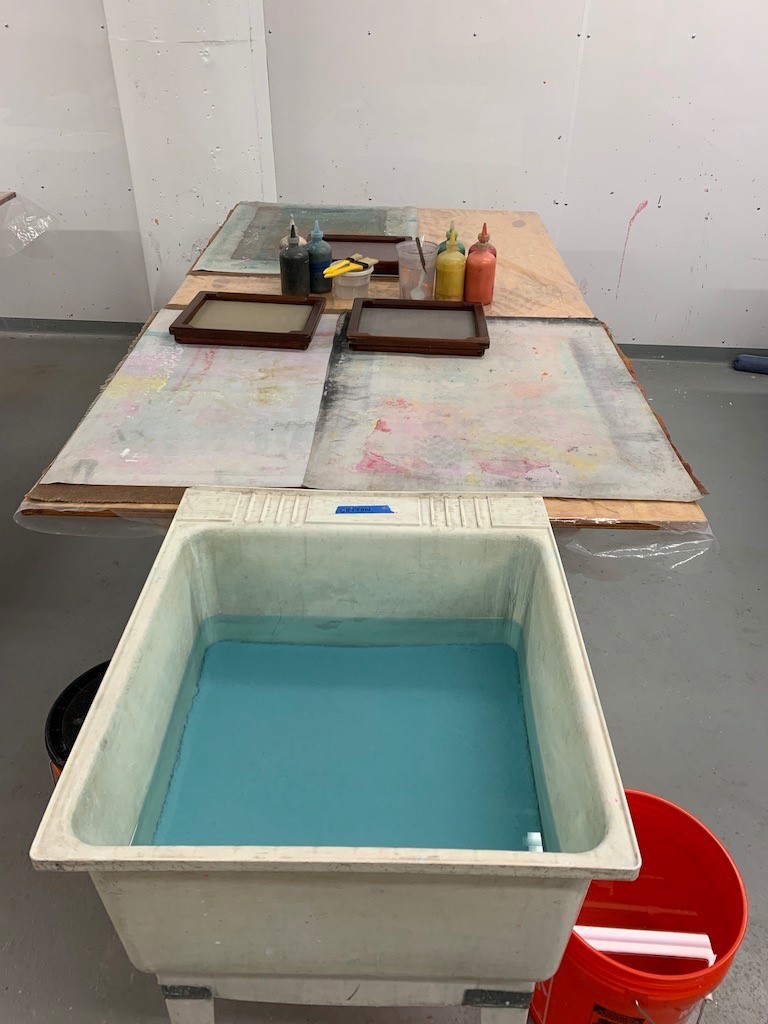
Station to workshop
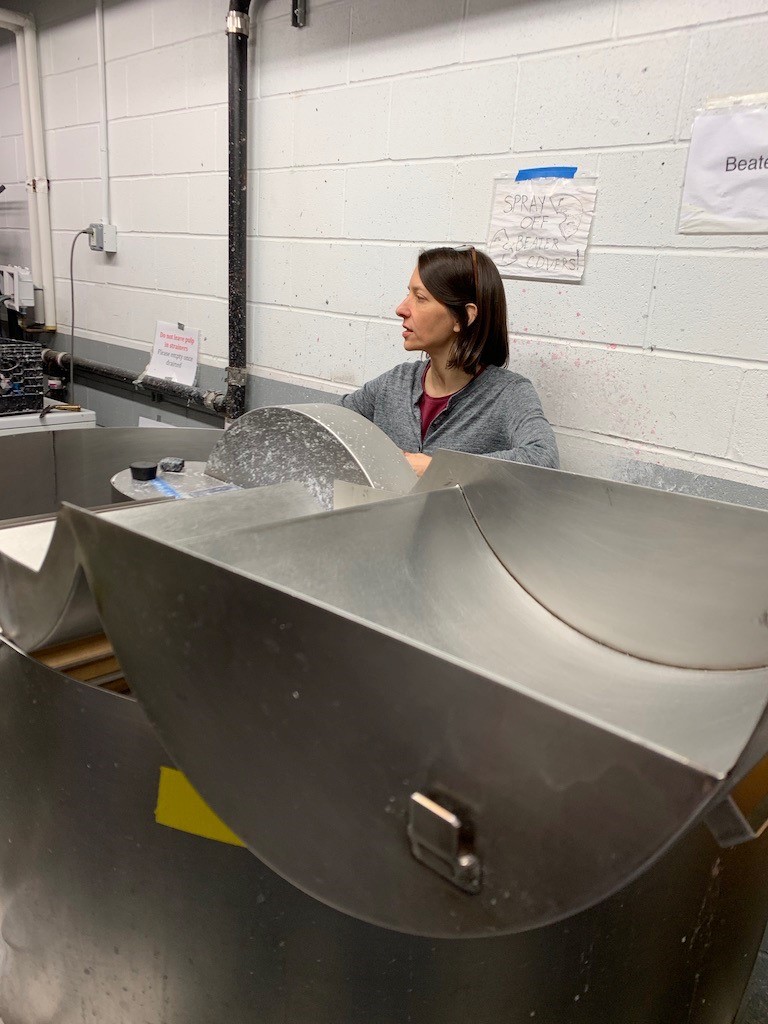
the beater machine
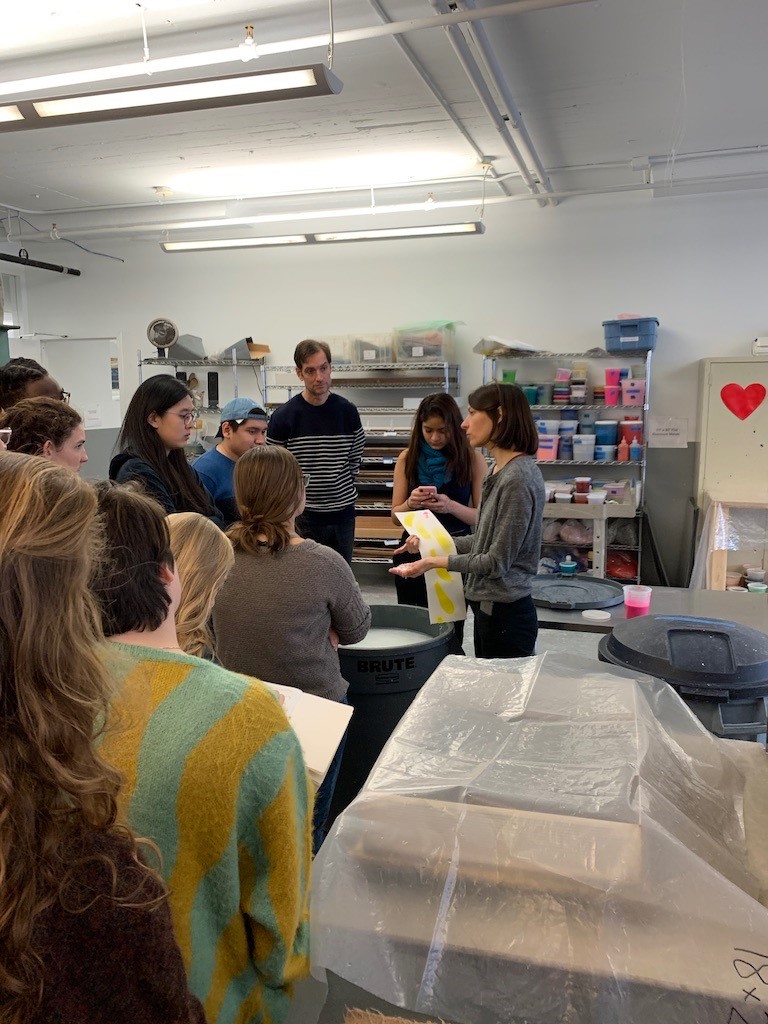
the creation with artists, professional studio
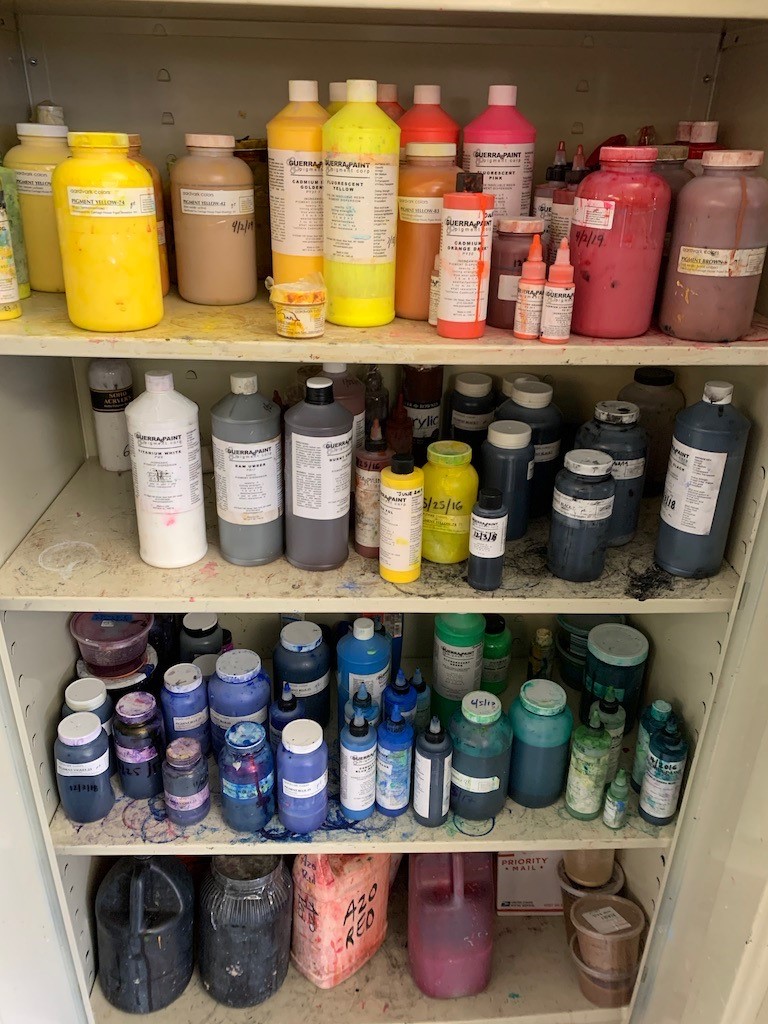
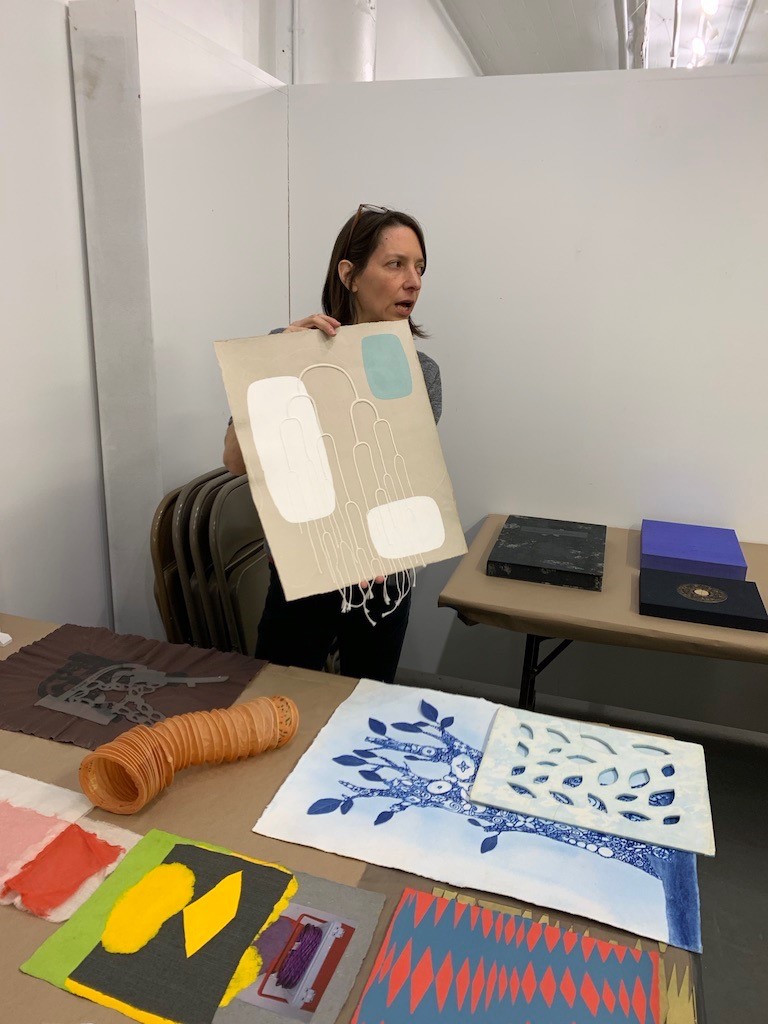
Some examples of final project with artist